Living in Casper means accepting that your patio furniture might relocate to your neighbor’s yard without warning. Those infamous Wyoming gusts—averaging 12-15 mph year-round with peaks exceeding 60 mph during spring storms—turn ordinary outdoor shade solutions into expensive kites. If you’ve watched a neighbor’s cheap awning cartwheel across Paradise Valley or heard stories of canvas shredding near Indian Hills, you already understand: standard retractable awnings simply weren’t designed for conditions at 5,000 feet elevation where the wind never truly stops.
This isn’t about whether you can enjoy your patio. It’s about choosing equipment that survives the reality of living between Casper Mountain and the North Platte River, where weather systems collide and calm days feel like gifts. Your ranch-style home or Western contemporary property deserves shade solutions engineered for exactly these challenges—not generic products marketed to gentle coastal climates.
Why Standard Awnings Fail in Casper’s Wind Corridor
Casper sits in one of the windiest populated corridors in the continental United States. According to the National Oceanic and Atmospheric Administration, Wyoming ranks as the third-windiest state, with Casper experiencing sustained winds above 20 mph on approximately 110 days annually (Source: NOAA National Centers for Environmental Information, 2022). Those statistics translate directly into bent frames, torn fabric, and warranty claims that manufacturers conveniently deny.
The Physics Working Against You
Standard retractable awnings typically carry wind ratings between 15-25 mph—adequate for a breezy afternoon in Phoenix, laughable for a Tuesday in Westridge. When gusts hit an extended awning, the fabric acts as a sail, transferring tremendous force to mounting hardware and frame joints. At your home’s elevation, air density drops approximately 17% compared to sea level (Source: Federal Aviation Administration Pilot’s Handbook, 2023), meaning winds carry less resistance but strike with sharper, more erratic force patterns.
The temperature swings compound this problem. Your awning might extend in 75°F morning sunshine, then face 45°F winds by evening. Aluminum frames expand and contract, fabric tension changes, and components designed for stable climates fatigue rapidly under Casper’s thermal cycling.
What We See in Failed Installations
- Mounting brackets pulled directly from siding or stucco on mid-century modern homes
- Fabric tearing at seam points within 18-24 months
- Motor burnout from fighting wind resistance during retraction
- Complete frame collapse during spring wind events near Hogadon Basin Ski Area
Wind-Resistant Features That Actually Matter Here
Not every feature marketed as “wind-resistant” delivers meaningful protection for Casper homeowners. Understanding which specifications genuinely matter helps you separate marketing language from engineering reality.
Frame Construction Standards
Look for extruded aluminum frames with wall thickness of at least 2mm—thinner materials flex and eventually crack under repeated stress. Powder coating should exceed 3 mils thickness to resist UV degradation at high altitude, where ultraviolet intensity increases approximately 8-10% per 1,000 feet of elevation (Source: Skin Cancer Foundation, 2021). Your Casper home receives roughly 40-50% more UV exposure than sea-level locations during summer months.
| Feature | Minimum Spec for Casper | Why It Matters |
|---|---|---|
| Wind Rating | 35+ mph sustained | Handles daily gusts without auto-retraction |
| Frame Thickness | 2mm+ extruded aluminum | Prevents flexing and metal fatigue |
| Fabric Weight | 12+ oz solution-dyed acrylic | Resists UV at 5,000ft elevation |
| Mounting Hardware | Stainless steel through-bolts | Won’t corrode or pull through siding |
Motorized Retractable Awnings Casper Homeowners Need
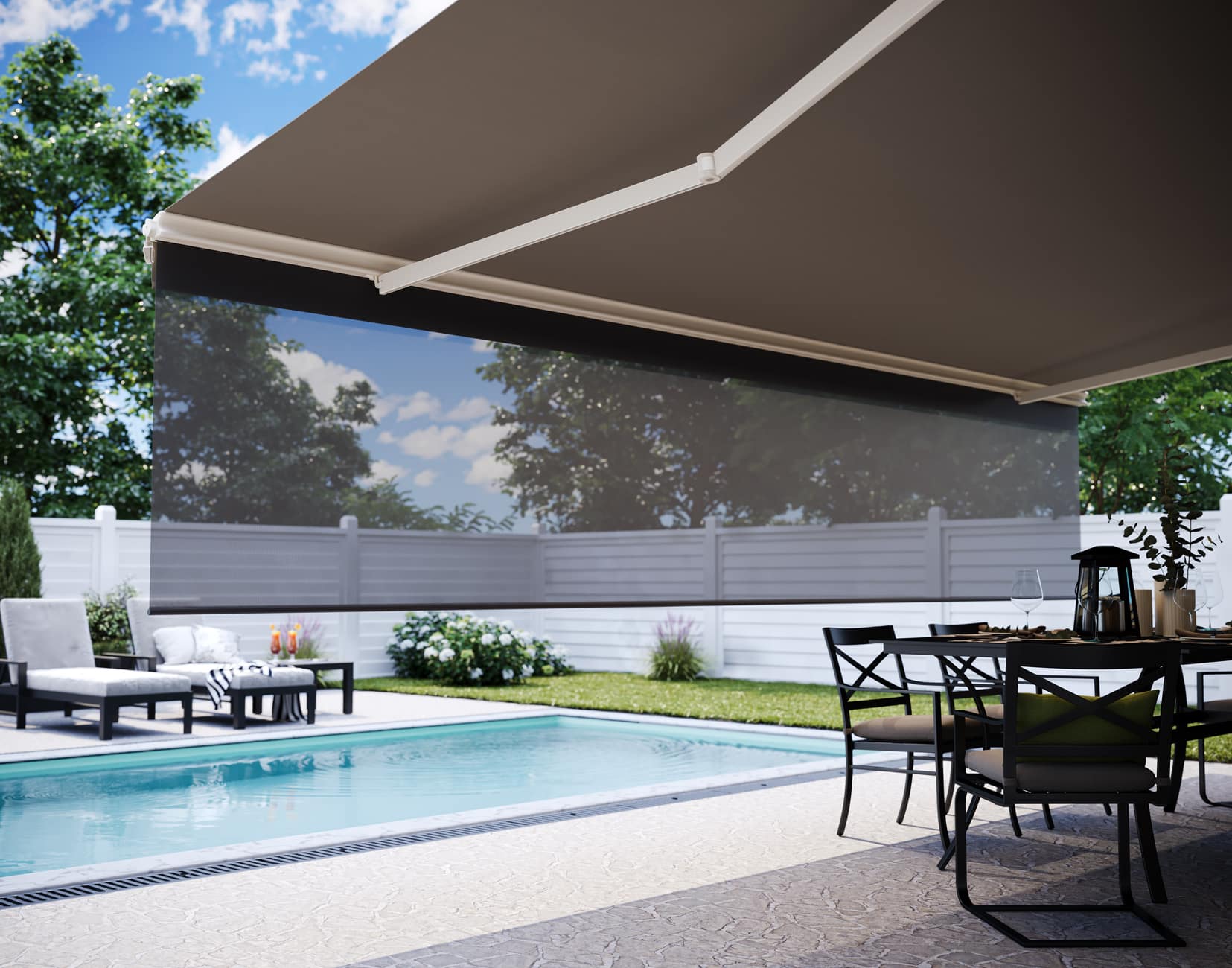
Manual retractable awnings require you to be home and paying attention when weather shifts—a gamble in a city where conditions change within minutes. Motorized retractable awnings paired with integrated wind sensors automatically retract when gusts exceed safe thresholds, protecting your investment whether you’re hiking Casper Mountain or working downtown.
Quality wind sensors activate at adjustable thresholds, typically 18-25 mph for retraction commands. The motor itself should deliver at least 50 Nm of torque for awnings spanning 12-16 feet, ensuring smooth operation even against moderate wind resistance during closing sequences.
Installation Considerations for Casper Architecture
Your home’s construction style directly impacts safe awning installation. Casper’s housing stock presents unique challenges that generic installation guides never address.
Ranch-Style and Western Contemporary Mounting
Ranch-style homes throughout Paradise Valley and Indian Hills typically feature wide overhangs and single-story profiles that seem ideal for awning installations. However, many were built with lightweight fascia boards inadequate for wind-loaded hardware. Proper installation requires through-mounting into rafters or adding backing plates that distribute force across multiple structural members.
Western contemporary homes with stucco or synthetic siding require specialized standoff brackets that prevent water intrusion at mounting points—critical when spring snowmelt combines with wind-driven rain. We’ve seen installations fail specifically because generic brackets cracked stucco, allowing moisture behind cladding that froze and expanded during Casper’s late-season cold snaps.
Working With Your Utility Setup
Motorized awnings require dedicated 120V circuits. If your home receives power from Rocky Mountain Power, confirm your panel has capacity for additional outdoor loads before installation day. Homes using Black Hills Energy for natural gas heating sometimes have older electrical panels that need evaluation. A qualified installer includes electrical assessment as part of your consultation—never assume existing outdoor outlets can handle motor loads safely.
“We had three awning companies tell us the same generic pitch before finding someone who actually asked about our wind exposure and how our Westridge home was built. That conversation alone saved us from a $4,000 mistake.” — Rebecca M., Westridge homeowner (energy bills reduced 18% after proper shade installation)
Choosing Outdoor Shade Solutions Wyoming Weather Demands
Beyond wind resistance, your investment should address the full spectrum of Casper’s climate challenges.
UV Protection at Elevation
At 5,150 feet, Casper receives approximately 25% more UV radiation than cities at 1,000 feet elevation (Source: Environmental Protection Agency UV Index Guide, 2020). Cheap awning fabrics fade and degrade within 2-3 seasons under these conditions. Solution-dyed acrylic fabrics—where color penetrates entire fiber strands rather than surface coating—maintain appearance and UV blocking for 8-10 years even under intense Wyoming sun.
The UV Index in Casper regularly reaches 9-10 during summer afternoons, categorized as “Very High” by the EPA. Quality awning fabric should block at least 95% of UV radiation, providing genuine skin protection during outdoor activities—not merely decorative shade.
Temperature Swing Durability
Your awning must function reliably across temperature extremes. Casper’s record high of 106°F and record low of -41°F (Source: National Weather Service, Casper WY Historical Data) represent endpoints, but daily swings of 30-40°F occur routinely from morning to evening. Lubricants, seals, and fabric coatings must tolerate this range without becoming brittle or gummy.
Making Your Investment Decision
Wind-resistant patio awnings represent a meaningful investment for Casper homeowners—typically $3,500-$7,000 for quality motorized units including proper installation. That investment pays returns through extended outdoor living season, reduced cooling costs (the Department of Energy estimates awnings can cut solar heat gain through windows by up to 77% on south-facing exposures), and genuine usability during Casper’s beautiful but breezy spring and fall months (Source: U.S. Department of Energy, Energy Saver Guide, 2022).
What a Proper Consultation Includes
- On-site wind exposure assessment specific to your lot position
- Structural evaluation of mounting surfaces
- Electrical capacity review for motorized options
- Fabric selection guidance based on orientation and use patterns
- Written warranty terms that don’t exclude wind damage in “high wind areas”
If a company offers pricing without seeing your property, they’re selling products, not solutions. Your Indian Hills ranch home faces different conditions than a Paradise Valley contemporary—cookie-cutter quotes ignore realities that determine whether your awning survives its first Wyoming spring.
Why Casper Homeowners Trust Local Expertise
National awning retailers fulfill orders but rarely understand local conditions. They’ve never watched fabric shred during a November Chinook or seen mounting hardware rip from stucco after a March gust. Local specialists who’ve installed hundreds of units in neighborhoods from Westridge to Indian Hills understand which products actually perform and which marketing claims collapse under Casper’s wind pressure.
We maintain relationships with Rocky Mountain Power and Black Hills Energy for coordination on installations requiring electrical work. We know which Casper building inspectors want permits for motorized installations and which neighborhoods have HOA requirements affecting awning colors or profiles. This local knowledge eliminates surprises and delays.
Schedule your free awning consultation and wind assessment today. We’ll evaluate your specific property, discuss options that match both your budget and Casper’s demanding conditions, and provide honest guidance on what will actually work for your home. No pressure, no generic sales pitch—just practical recommendations from people who understand what it takes to enjoy your patio when the wind never stops blowing.
Frequently Asked Questions
How fast do wind sensors retract motorized awnings during sudden gusts?
Quality wind sensors trigger retraction within 3-5 seconds of detecting threshold wind speeds, typically completing full retraction in 30-60 seconds depending on awning width. Sensors sample wind speed continuously rather than waiting for sustained gusts, protecting your awning from the sudden bursts common in Casper’s unpredictable wind patterns.
Can retractable awnings be installed on homes with stucco exteriors common in newer Casper developments?
Yes, but installation requires specialized standoff brackets and waterproof flashing to prevent moisture intrusion at mounting points. Installers must avoid standard lag bolts that crack stucco and instead use through-bolts with backing plates, adding approximately $200-400 to installation costs but preventing costly stucco repairs later.
What maintenance do wind-resistant awnings need in Casper’s climate?
Brush fabric monthly during high-pollen spring season to prevent debris accumulation that holds moisture. Lubricate arm pivot points with silicone spray before winter and after spring thaw. Inspect mounting hardware annually for any loosening caused by freeze-thaw cycling, and test wind sensor calibration each spring before peak wind season arrives.
Do retractable awning warranties cover wind damage in Casper?
Most manufacturer warranties exclude wind damage above rated thresholds, making proper product selection critical. Awnings rated for 35+ mph sustained winds provide coverage under normal Casper conditions, while cheaper 20-25 mph rated products leave you unprotected for claims. Always request written warranty terms specifying exact wind speed limitations before purchasing.

